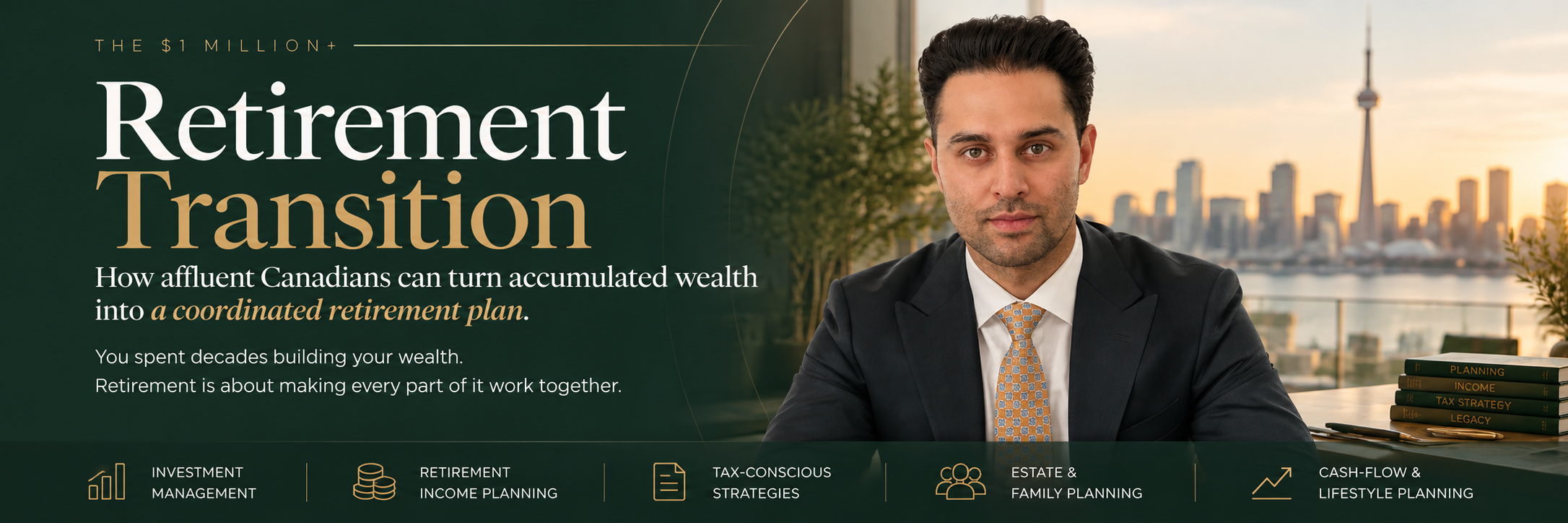
The $1 Million+
Retirement Transition
How affluent Canadians can turn accumulated wealth into a coordinated retirement plan.
You spent decades building your wealth. Retirement is about making every part of it work together, including your investments, income sources, taxes, liquidity, estate considerations, family priorities and lifestyle goals.
Get the Complimentary Guide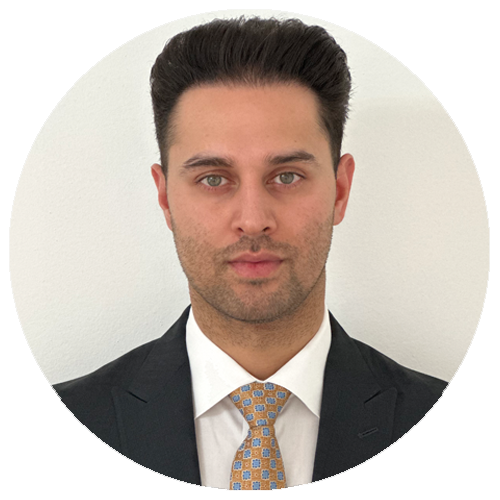
Start With Clarity
Request your copy and learn the key questions worth considering as you approach or enter retirement.
Retirement Changes the Question.
For decades, the goal was to accumulate. Earn, save, invest and build. Retirement changes the equation. Now the challenge is coordinating the wealth you've built so every part supports the others.
“How do I turn everything I’ve accumulated into a reliable, tax-conscious plan for the next 20, 30, or more years?”
Does Any of This Sound Familiar?
Many successful Canadians have done a great job saving. The challenge is knowing how all the pieces should work together as retirement gets closer.
Too Much Sitting in Cash or GICs?
You value stability, but you're wondering how inflation, taxes and long-term growth fit into the bigger retirement picture.
Unsure What to Draw From First?
CPP, OAS, pensions, RRSPs, RRIFs, TFSAs and non-registered investments can all play different roles.
Concerned About Retirement Taxes?
What you earn matters. What you keep after tax can matter even more when several income sources are involved.
Accounts Spread Across Institutions?
You may have investments in several places without one coordinated view of your overall retirement plan.
Will Your Wealth Support Decades of Retirement?
A retirement lasting 20 or 30+ years changes how preservation, growth, income and liquidity need to work together.
Planning a Business Exit?
Selling a company can create a large capital pool, but that capital still needs a purpose, an income strategy and a plan.
What You'll Learn
The guide focuses on the retirement transition and how the different parts of your financial life can work together.
Coordinate Retirement Income
Understand why CPP, OAS, pensions, RRSP/RRIF withdrawals, TFSAs, non-registered investments, corporate assets, rental income and business-sale proceeds should be considered together.
Understand the Role of Taxes
See why similar headline investment returns can produce different outcomes after tax, and why tax considerations form part of retirement planning.
Balance Preservation, Growth & Income
Retirement planning isn't simply about becoming more conservative. It involves balancing preservation, growth, income, liquidity and purposeful risk.
Plan Beyond the Portfolio
Cash flow, investments, retirement income, lending, estate considerations, family and lifestyle goals all form part of a broader wealth plan.
Think Beyond the Business Sale
For business owners, the sale is not the finish line. Proceeds still need to support income, liquidity, growth, family priorities and estate objectives.
Keep Your Plan Adaptable
Markets, interest rates, tax rules, family circumstances and priorities change. A wealth plan should be reviewed and adjusted as life changes.
The Comfort of Cash and GICs Can Hide a Different Risk.
Cash, GICs, term deposits and other interest-producing investments can feel predictable and may help reduce day-to-day market anxiety.
But concentrating too heavily in them can raise other questions around inflation, tax, purchasing power and long-term growth.
The goal is not to eliminate conservative investments. It is to understand how they fit into the larger plan.
Get the Complimentary GuideBuilt for the Retirement Transition.
Designed for Canadians approaching or entering retirement who have worked hard to build meaningful wealth and now want greater clarity around how everything fits together.
A Planning-First Approach to Retirement Wealth.
Khush Dhaliwal is a Wealth Manager with more than a decade of experience at Canadian banks and private investment firms. He works with affluent Canadians, combining holistic financial planning with disciplined investment management so that every decision is made with the full picture in view. His specialty is tax efficiency: structuring plans and portfolios so clients keep more of what they earn, grow, and eventually pass on.
Central to Khush's approach is building asset allocations that fit each client's goals, time horizon, cash flow needs, and comfort with risk. He takes the time to understand what matters most before making recommendations, then revisits the plan as life and markets change. A graduate of Western University, Khush is based in Burlington, Ontario and he also serves on the Board of Directors of Crime Stoppers of Hamilton.
Your Next Step Is Clarity.
You may already have enough assets. The real question is whether they are working together. Start with a clearer picture of what you own, where your income may come from, how taxes may affect it, how much risk you're taking and how your assets can work together.
Get the Complimentary Guide